Newsletter #118
Enjoy Newsletter #118.
Telling the story right: efficient logging in Go
Following up on his post about Go error handling, Robin Siep turns to logging: good logs must carry enough context to debug production issues while remaining easy to read during local development. He groups what to log into three categories: errors, almost always at ERROR level with a stack trace and triggering conditions; important business events and state transitions, typically at INFO level recording who performed the action; and interactions with databases, third-party services, or clients, where overly chatty details can be pushed down to DEBUG. Three common mistakes are logging secrets, credentials, or PII, running production at the wrong log level, and pruning logs too aggressively up front—since logging too little usually hurts far more than logging too much.
Structured logs are essential in production for filtering and querying, whereas colorized plain-text logs are much easier to scan locally. Siep recommends keeping plain-text output in production as well: when your log ingestion pipeline goes down, stdout text logs are what you have left to diagnose and fix the pipeline itself. His implementation uses Go’s standard slog package with two custom handlers: one that formats records as CLEF to ship to Seq with stack traces extracted into a dedicated field, and a colorized text handler that renders attributes cleanly. If shipping to Seq fails, both the pipeline error and the original log record still get written through the text handler. The same pattern works with zap, showing that logs are only as valuable as their ability to preserve context even when your observability stack is having a bad day.
On CPU Physics and CPU Cycles
This post is a draft book section on writing efficient C++ for modern 64-bit CPUs, built around one central thesis: software performance is governed not just by algorithms, but by hardware physics. The farther an electrical signal has to travel, the slower the access, largely because parasitic capacitance grows with wire length. That is why operations on registers and the ALU take just a couple of cycles, L1 cache takes a few cycles, L2 and L3 get progressively more expensive, and a trip to main RAM can cost hundreds of CPU cycles. Going farther out—across the motherboard to SSDs, HDDs, and the network—adds orders of magnitude more latency, giving cache locality massive real-world impact.
To hide that latency, modern CPUs rely on instruction pipelining, superscalar execution, and branch prediction, speculatively executing instructions before a branch outcome is known. Even so, a mispredicted branch costs tens of cycles; attributes like [[likely]] and [[unlikely]] should be reserved for cases where the branch direction is overwhelmingly lopsided, such as error-handling paths. Cache warmth depends on access patterns and working set size rather than whether memory lives on the stack, static storage, or the heap. Contiguous layouts like std::vector shine during sequential traversal, making vector far friendlier to both CPU caches and the TLB than node-based structures like linked lists or trees. Think of performance as a chain of physical costs.
The Log Is the Agent
Ishaan Sehgal offers a crisp definition of an AI agent: the agent is not the model, the runtime, the active loop, or the toolset—it is the durable log of everything it has seen and done. He compares it to a character in Skyrim or Elden Ring: what defines your character isn’t the game engine, the console, or the controller, but the save file. For an agent, the log is an append-only sequence of events capturing user inputs, model outputs, tool calls, and tool results, alongside references to system prompts and skills. The log alone is enough for a brand-new process to reconstruct state and pick up right where the previous one left off.
The architectural implication is that the log must be the centerpiece of the system rather than a debugging byproduct. Every operation reads from the log, appends to the log, or renders a projection of the log—much like a database treats tables, indexes, and caches as projections over a write-ahead log. While the log enables crash recovery, it doesn’t automatically make external side effects idempotent, so runtimes still have to handle duplicate or ambiguous in-flight tool calls; if a worker dies, another worker can claim the session and continue; if you want to test a different model or strategy, you simply fork from the same history. Context compaction and summarization help fit within token windows, but because they are lossy by nature, they must never replace the raw log as the source of truth. This framing also exposes a new form of vendor lock-in: lock-in to an agent’s operational history. Whoever can inspect, export, and query the log is who truly owns the agent.
Software Is Not A Single-Player Game
David Poll responds to the argument that all meaningful judgment should happen before code review, back in the PRD or design doc phase. That view had a rational origin: writing code used to be the most expensive step, so the industry built an entire apparatus of PRDs, design docs, and RFCs to reduce the cost of building the wrong thing. Yet that linear view misses the essence of software development: it is not a single-player game, but a collaborative practice where teams develop shared technical taste, mental models, and product judgment over time. Code review isn’t just about catching bugs—it is one of the primary places where that shared understanding is forged.
Now that AI has dramatically lowered the cost of writing code, documents that used to serve as proxies for code are giving way to working changes. A prototype or pull request is now cheap enough to be a better medium for debate, making code review even more central: the team looks at a concrete change, asks how it affects the system and users, and decides whether it belongs in the product. A closed pull request is no longer a wasted failure, but often the cheapest way to learn that an approach doesn’t fit. Still, Poll warns against a reckless “just ship and rollback” mentality: code can be reverted, but user trust and product perception cannot. Some decisions still must be settled before coding—such as org-wide architecture, security, compliance, and customer commitments—even as the set of things requiring heavy up-front specification shrinks.
Cleaning up after AI rockstar developers
Jesse Skinner uses the trope of the “rockstar developer” to illustrate a familiar engineering hazard: someone brilliant, fast, and enamored with shiny new technology who can single-handedly rewrite a core system over a weekend, but leaves behind code the rest of the team struggles to understand or maintain. When that person moves on, the remaining team pays the real bill: spending days just getting the project to run, untangling convoluted data flows, learning unfamiliar languages or libraries, and convincing management that the system needs rescuing rather than continuing to coast on the rockstar’s aura.
Skinner’s core point is that AI can amplify this exact failure mode. Every chat session with an LLM is like dropping a brand-new “rockstar” into your codebase: it generates code at breakneck speed, holds zero long-term institutional memory, eagerly applies generic “best practices” the problem doesn’t need, and bears no responsibility for whether the system remains comprehensible to the team six months later. When dozens of features and bug fixes are generated across disconnected sessions, a codebase quickly devolves into a patchwork of hundreds of clashing design styles while the architecture balloons far beyond the problem’s actual complexity. He advises using LLMs as assistants under firm human technical leadership: work in small increments, review every change closely, retain architectural control, simplify relentlessly, and stay willing to write code by hand whenever that is the better way to preserve quality.
A new era for software testing
Antirez observes that while AI-assisted coding trades away some structural code quality for speed, in QA and testing LLMs unlock much stronger automation without sacrificing quality. Traditional test suites made up of unit and integration tests remain essential, but 100% line coverage does not mean 100% state coverage. End-to-end integration testing has historically been painful due to timing issues, complex environment setup, and outputs that require human judgment to evaluate, causing many manual test scenarios to be skipped before release.
His proposal is to write a Markdown prompt instructing an AI agent to act as a QA engineer performing exploratory manual testing on a new release. The agent starts by inspecting recent commits since the last release, identifying potentially affected areas, and hunting for targeted regressions. On DwarfStar, an open-source LLM inference engine, the agent tested distributed inference across two MacBooks over every available GGUF model file and caught a throughput regression without needing hardcoded baseline numbers, reasoning about expected speeds dynamically. On Redis Arrays, the agent built a non-trivial application from scratch, spun up an environment with replication and persistence, and simulated days of multi-user activity to uncover edge-case misbehavior—even flagging surprising semantics, missing docs, and rough edges. Antirez believes agentic QA can raise the quality bar for every release, partially offsetting the structural sloppiness introduced by rapid AI coding.
Nobody Pushed Back: Why Engineers Stay Silent Until It’s Too Late
This article argues that many architectural disasters happen not because engineers failed to spot the flaw, but because they saw it clearly and didn’t feel safe speaking up. In a meeting room, a shaky technical direction gets rubber-stamped under the banner of “alignment” even though half the room privately disagrees; months later, when the system collapses, everyone admits they saw it coming. The pattern repeats across the industry: the technical risk is obvious to the people closest to the work, but the social and career cost of pushing back is higher than the cost of staying quiet.
Case studies from Nokia, TSB, Boeing, and Microsoft show that bad news is rarely missing—it just fails to travel upward to decision-makers. Nokia had engineers who knew Symbian wasn’t built for the touchscreen era; TSB had technical objections raised before its disastrous core banking migration; Boeing had engineers flagging MCAS risks; Microsoft had internal signals that Windows Phone’s direction was boxing itself into a corner. The root cause isn’t personal cowardice, but organizational incentives: dissent gets labeled “not being a team player,” the Highest Paid Person’s Opinion (HiPPO) wins by default, and watermelon metrics (green on the outside, red on the inside) are used to shut down debate, turning technical trade-offs into political loyalty tests. Effective pushback isn’t saying “this is wrong,” but making costs and risks concrete through questions like: what will this decision cost us in 18 months, how are we testing this failure mode, and what is our rollback plan if it breaks?
Loop Engineering
Addy Osmani describes “loop engineering” as the natural evolution beyond prompt engineering: instead of manually prompting an agent turn by turn, the engineer designs a self-sustaining loop that finds work, delegates tasks, verifies results, and decides what to do next. A loop acts like a recursive goal—you define the objective, and the AI iterates until the exit criteria are met. According to Osmani, this paradigm is already practical today because both Codex and Claude Code provide all the necessary building blocks, so rather than arguing over which tool wins, teams should design loops that can run across both.
A complete loop rests on five primitives. Scheduled automations triage issues, summarize CI failures, or hunt for new bugs. Git worktrees let multiple agents work in parallel without stepping on each other’s files. Skills package project-specific knowledge so you don’t have to re-explain conventions in every session. Connectors, typically built on MCP, give agents access to issue trackers, databases, Slack, or staging APIs. Subagents separate the builder from the verifier, since an agent that just wrote the code is usually far too lenient when grading its own homework. Tying it all together is durable external memory—Markdown files or Linear boards in the repo—because models forget between runs while the repository remembers. Even so, Osmani stresses that loops don’t replace the engineer: an unsupervised loop is also an unsupervised mistake generator. Without human review and comprehension, loops simply accumulate “comprehension debt” faster; a good loop accelerates delivery while keeping the engineer deeply connected to how the system works.
Bonus
Images:
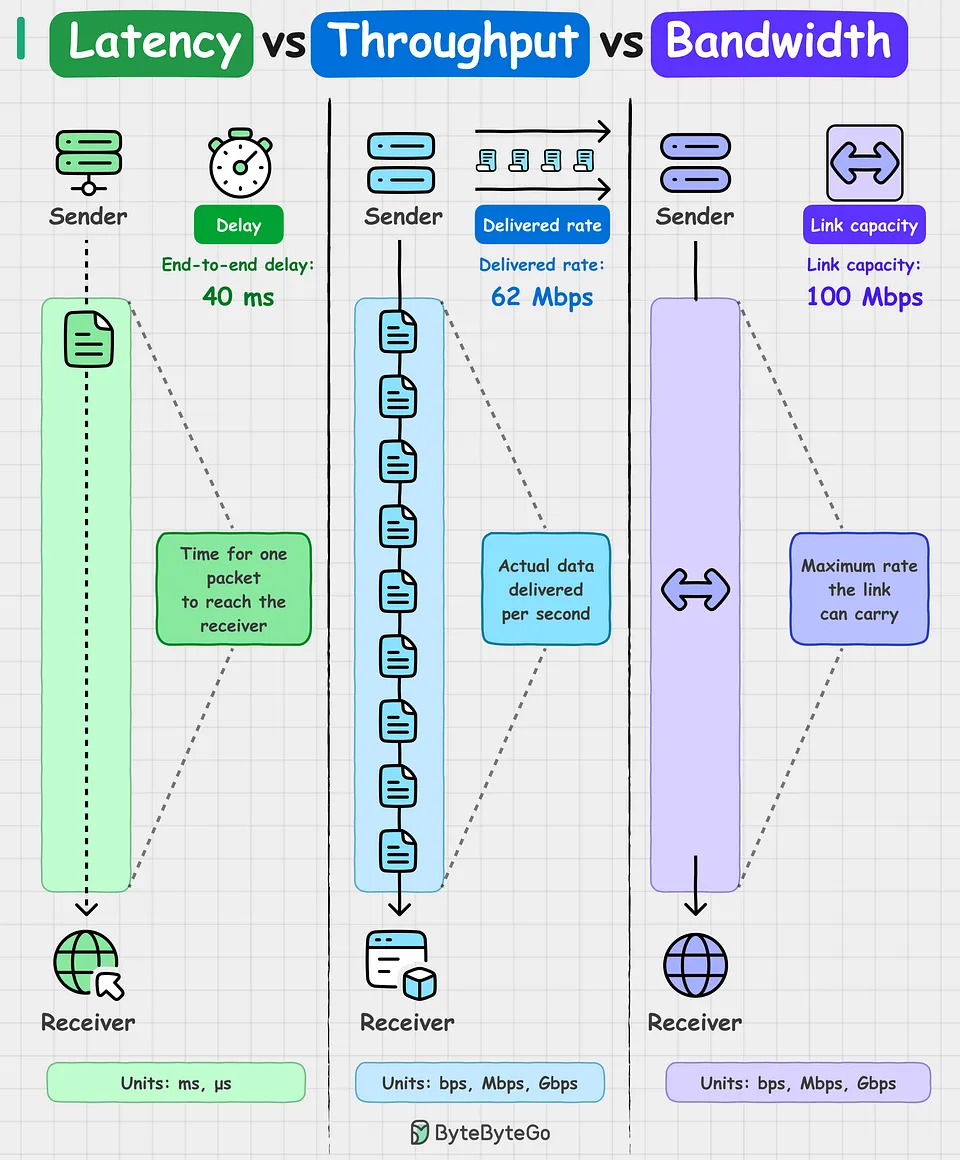
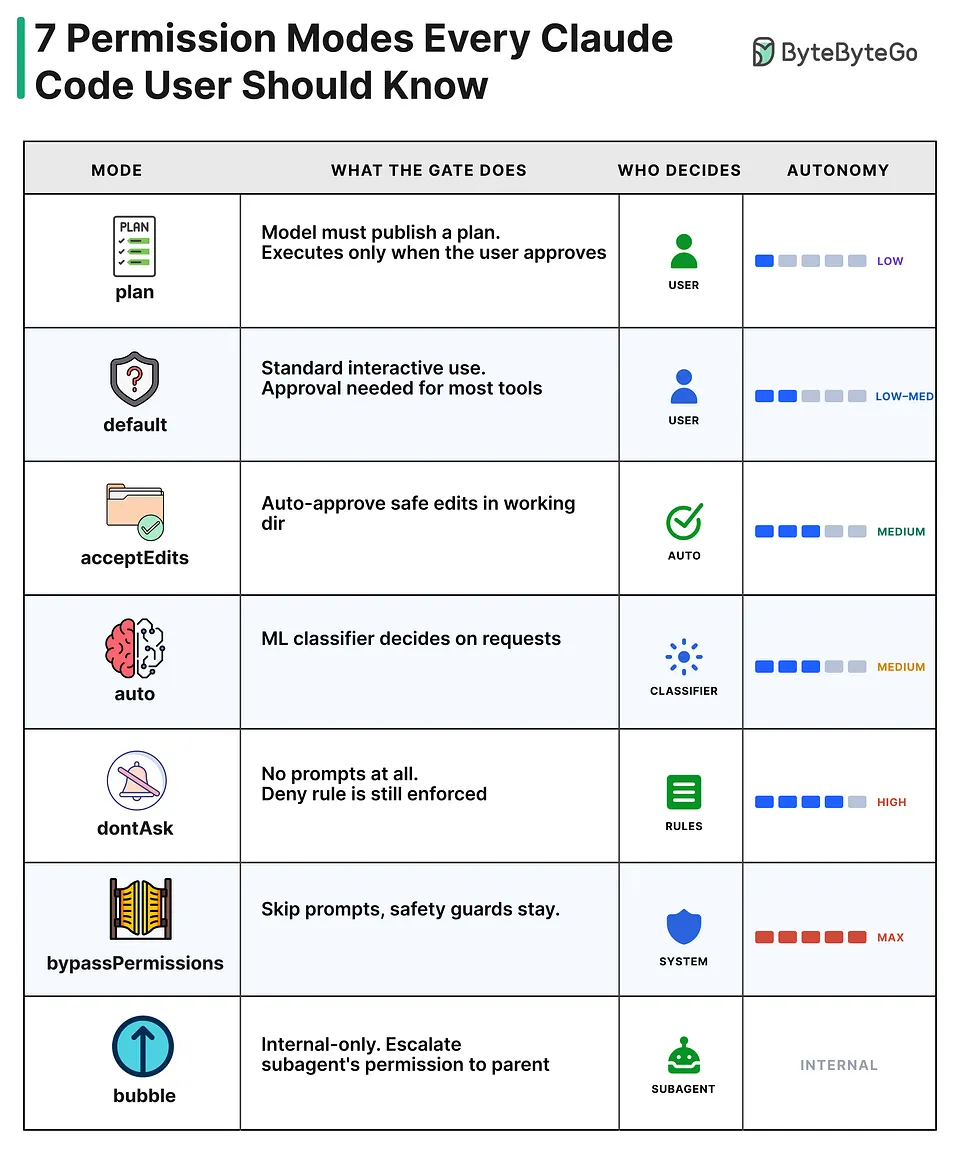
Videos: How Do CPUs, GPUs, and TPUs Differ?
This video breaks down the differences between CPUs, GPUs, and TPUs: CPUs offer flexibility for general-purpose tasks, GPUs excel at massively parallel processing, and TPUs are purpose-built accelerators for machine learning workloads. A concise overview to help you pick the right hardware across latency, throughput, and cost trade-offs.
This post was rewritten by Claude Code with Opus 5.5 on 27/09/2026; reviewed and edited by Codex with GPT 6.1 Sol on 09/11/2026, and re-verified by Claude Code with Sonnet 5.5 on 16/11/2026.
Comments